
-
office:01277321 740
-
Out of hours/Mobile:0795 627 0186
-
Email:info@completeliftingservices.co.uk


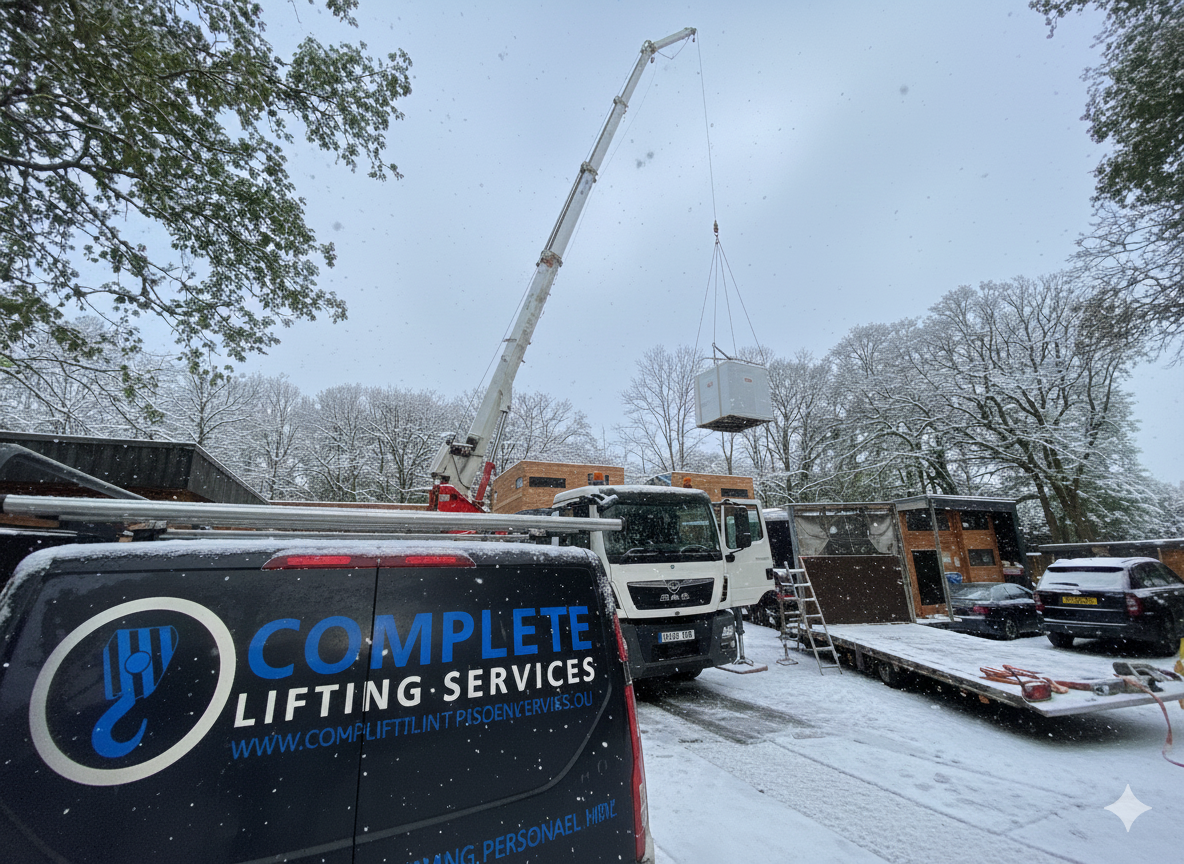
Winter weather often raises an important question for anyone planning a lift, can cranes operate safely in snow and ice? The short answer is yes, but only when the right precautions, equipment, and planning are in place. Snow, ice, and freezing temperatures introduce additional risks, which is why professional assessment and experienced operators are essential during winter lifting operations.
Snow and ice can affect crane operations in several ways. Slippery ground conditions may compromise stability, reduced visibility can impact communication, and ice build-up on crane components can interfere with smooth operation. Wind is also a major factor during winter, as cold weather systems often bring gusts that exceed safe lifting limits.
These risks do not mean cranes cannot be used, but they do mean lifting operations must be carefully assessed before work begins.
Cranes are designed to operate in a wide range of conditions, but winter use requires extra control measures. Before any lift takes place, a full site assessment should be carried out to check ground conditions, access routes, and weather forecasts. Snow and ice may need to be cleared from setup areas, and ground mats or outrigger pads used to spread the crane’s load safely.
Crane components such as wire ropes, hooks, and hydraulic systems are also checked for ice build-up. In freezing temperatures, hydraulic fluids and lubricants must be suitable for cold weather to ensure smooth and responsive operation.
Importantly, lifting plans should always allow flexibility. If conditions deteriorate or wind speeds exceed safe limits, lifts should be postponed. Knowing when not to lift is just as important as knowing how to lift.
Winter crane operations rely heavily on operator experience and proper lift planning. Trained operators understand how cold weather affects crane behaviour and can adapt their approach accordingly. This includes slower, more controlled movements and increased communication with lifting teams on the ground.
For more complex or higher-risk lifts, a contract lift option may be the safest choice. This ensures that lift planning, supervision, and risk management are handled by professionals who are familiar with winter operating conditions.
In built-up areas, winter lifting can be even more challenging. Restricted access, traffic management, and public safety all need to be considered alongside weather conditions. For projects in the capital, using a provider experienced in city work is essential. We regularly support winter projects through our mobile crane hire services in London, ensuring lifts are planned safely and carried out efficiently, even in colder months.
Cranes can operate safely in snow and ice, but only with the right preparation, equipment, and expertise. Careful planning, continuous monitoring of weather conditions, and experienced operators are key to reducing risk. When winter lifting is approached professionally, projects can continue safely and without unnecessary delays.